
Neglected Tropical Diseases
Neglected tropical diseases (NTDs) are a diverse group of infectious diseases that pose a major challenge to global public health. They can be caused by a wide range of pathogens, including viruses, bacteria, parasites and fungi, as well as by the action of toxins.
These diseases are closely linked to conditions of poverty and inequality in access to health services, and disproportionately affect the most vulnerable populations. They generate a high burden of disease and mortality, particularly in low- and middle-income countries, where access to safe drinking water, adequate sanitation and quality healthcare is limited or non-existent. NTDs include diseases such as dengue, Chagas disease, noma, leishmaniasis and leprosy, among others.
Epidemiology of NTDs
From an epidemiological perspective, NTDs are highly complex. They may be closely linked to environmental factors, transmitted through vectors such as mosquitoes or flies, involve animal reservoirs and/or depend on complex biological cycles. This makes surveillance and control particularly challenging, especially in settings with fragile health systems.
It is estimated that more than 1 billion people currently live with one or more NTDs, and that around 1.5 billion people require preventive or curative interventions. In addition to a considerable health burden, these figures also represent a profound social and economic impact, as many of these diseases lead to chronic disability, stigmatisation or a deterioration in quality of life.
They are more prevalent in rural areas, hard-to-reach regions and conflict settings, where access to safe water, basic sanitation and quality health services is limited. Climate change adds further pressure by altering the distribution of vectors and worsening environmental conditions that favour the transmission of many of these diseases.
Why are they “neglected”?
Despite their enormous impact, these diseases have historically received little attention in global health programmes and limited resources from major funding agencies. This lack of priority helps to perpetuate a vicious cycle of poverty and disease: NTDs affect already marginalised communities, limit access to education and employment, and reinforce processes of social exclusion and stigmatisation.
How can we address neglected tropical diseases?
To tackle this problem, the WHO proposes a comprehensive approach based on five strategic interventions: innovative and intensified disease management, chemoprophylaxis (preventive medicines), vector control, veterinary public health and improvements in safe water, sanitation and hygiene services. Evidence shows that the greatest impact is achieved when these interventions are combined and implemented in a coordinated manner, rather than addressed in isolation.
Looking ahead to 2030, some of the key actions required to progress towards the elimination of NTDs include understanding how climate change is altering their epidemiology, closing gaps in research and development, strengthening medicine supply chains, and improving data systems to ensure effective monitoring of progress.
Which are the neglected tropical diseases?
Official list of neglected tropical diseases according to the WHO (January 2025):
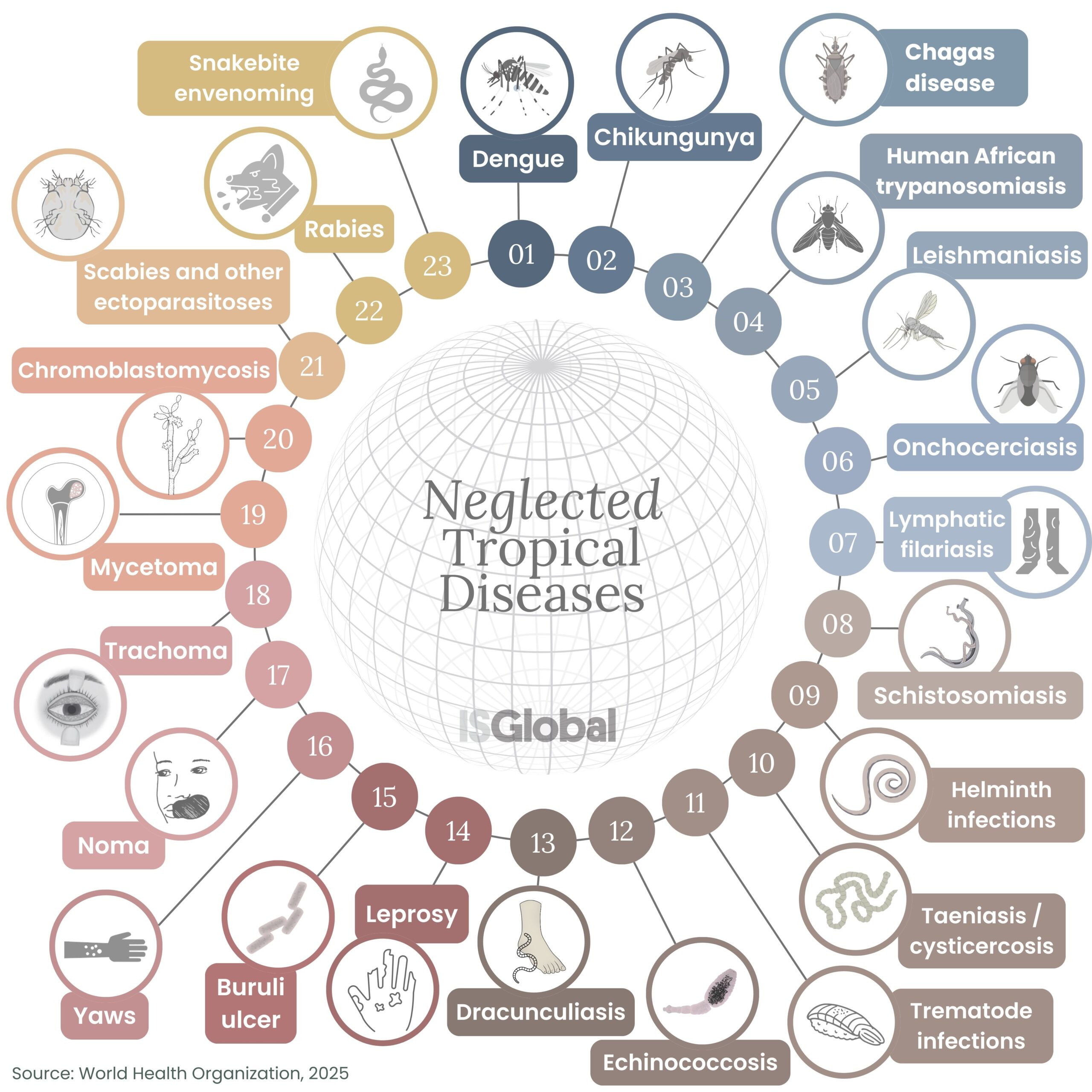
- Dengue: A viral infection transmitted by mosquitoes of the Aedes genus, characterised by fever and systemic symptoms of varying severity. Currently, approximately half of the world’s population is currently at risk of contracting dengue, with an estimated 100–400 million infections occurring each year.
- Chikungunya: A viral disease transmitted by Aedes mosquitoes, characterised by acute fever and joint pain, which may persist over time. Between January and September 2025, more than 445,000 cases were reported, although the true burden may be higher due to limited surveillance in several regions, particularly in Africa.
- Chagas disease: A parasitic infection caused by Trypanosoma cruzi that may progress to involve the heart or digestive system chronically. It is estimated that more than 7 million people are affected worldwide, primarily in the Americas.
- Sleeping sickness (human African trypanosomiasis): A parasitic disease transmitted by the tsetse fly that affects the central nervous system in advanced stages. The number of cases reached a historic low of fewer than 2,000 in 2017 and fewer than 1,000 in 2018, remaining below this threshold from 2022 onwards.
- Leishmaniasis: A group of parasitic diseases transmitted by sandflies, which are similar to mosquitoes in appearance. These diseases may present as cutaneous (ulcers), mucosal, or visceral (affecting the internal organs) forms. Around 13,000 visceral cases and more than 200,000 cutaneous cases were reported in 2022.
- Onchocerciasis: A parasitic infection transmitted by blackflies that primarily affects the skin and eyes. It remains endemic in some areas of sub-Saharan Africa.
- Lymphatic filariasis: A parasitic disease transmitted by mosquitoes that disrupts the lymphatic system and can cause chronic lymphoedema (swelling due to the accumulation of lymphatic fluid). In 2018, 51 million people were living with lymphatic filariasis.
- Schistosomiasis: A parasitic infection acquired through contact with infested freshwater that affects internal organs and tissues. It is estimated that 14,000 people died from the disease in 2021.
- Soil-transmitted helminth infections: A group of intestinal worm infections associated with contaminated soil and poor sanitation. These infections are among the most common parasitic infections worldwide and, according to data from 2022, it is estimated that they affect 1.5 billion people (24% of the global population).
- Taeniasis / cysticercosis: Infections caused by foodborne tapeworms that can affect the central nervous system. Taenia solium is responsible for 30% of epilepsy cases in many endemic areas.
- Foodborne trematodiases: These are parasitic infections acquired through the consumption of raw or undercooked food, particularly fish or aquatic plants. According to estimates from 2015, foodborne trematodiases cause more than 7,000 deaths per year.
- Echinococcosis: A zoonotic parasitic disease characterised by cyst formation in organs such as the liver or lungs. Around 2,800 cases were reported in 2022.
- Dracunculiasis: A parasitic infection transmitted through contaminated drinking water. The number of cases declined by 99% between 2010 (when there were nearly 2,000 cases) and 2021 (when there were 15 cases).
- Leprosy: It is a chronic bacterial disease that affects the skin and peripheral nerves. In 2020, more than 120,000 cases were reported.
- Buruli ulcer: A bacterial infection that causes progressive skin lesions. In 2022, approximately 2,100 cases were reported.
- Yaws: A bacterial infection that primarily affects the skin and bones during childhood. There are no recent global incidence figures, but eradication by 2030 remains a target.
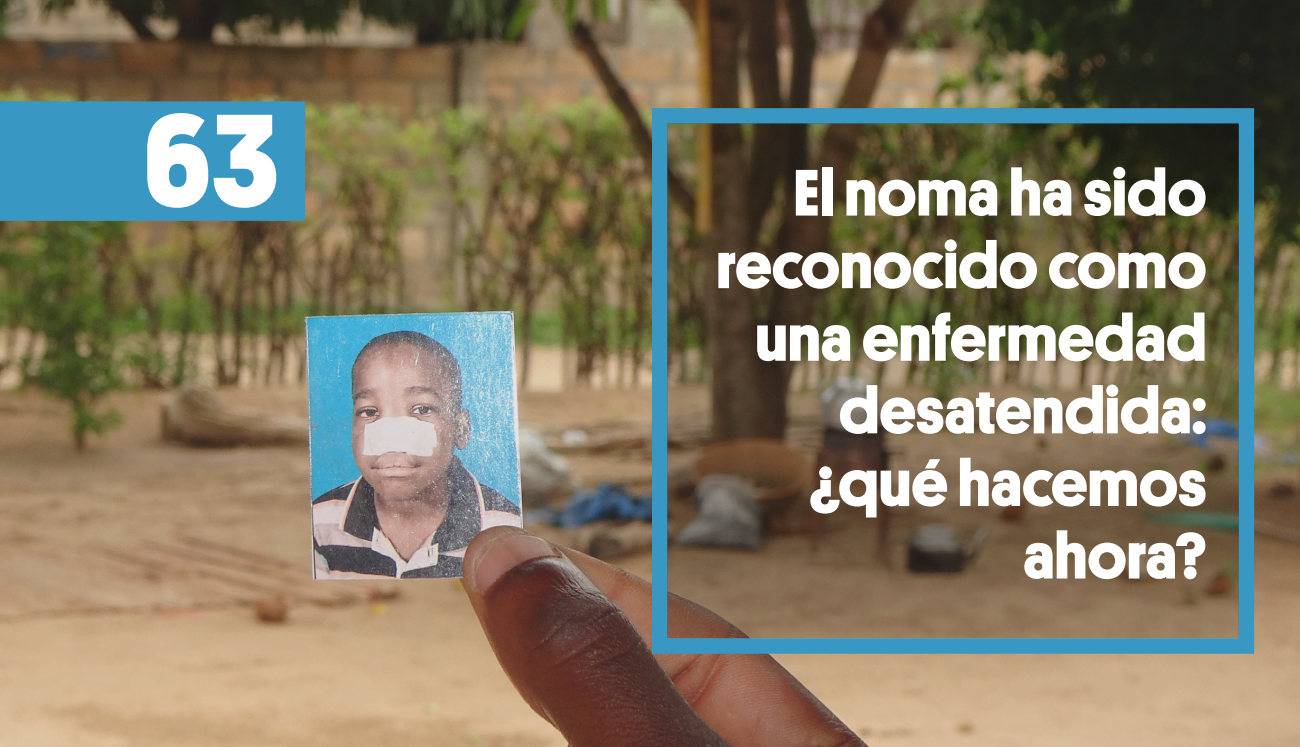
- Noma: It is an infectious disease associated with malnutrition and extreme poverty that affects oral and facial tissues, mainly in children. Very limited global quantitative data are available.
- Trachoma: A recurrent bacterial eye infection that can cause progressive visual impairment. In 2022, more than 129,000 cases requiring individualised treatment were reported.
- Mycetoma: It is a chronic infection caused by fungi or bacteria that affects the skin, subcutaneous tissue and bone. Its global burden is unknown, but it is endemic in Africa, Latin America, Asia and Europe.
- Chromoblastomycosis and other deep mycoses: These are chronic fungal infections of the skin and deep tissues, which are associated with skin trauma and environmental exposure. Around 100 cases of chromoblastomycosis were reported in 2022.
- Scabies and other ectoparasitoses: Skin infestations caused by external parasites transmitted through close contact. According to estimates from 2023, around 400 million people are affected by them each year.
- Rabies: A viral disease mainly transmitted through bites from infected animals that affects the nervous system. In 2022, 795 cases of rabies were confirmed.
- Snakebite envenoming: A condition caused by the injection of snake venom that requires access to antivenom. It is estimated that 81,000 to 138,000 people die from it every year.
READ MORE
COLLAPSE
- Noma, the forgotten disease that remains invisible(ISGlobal, 2025)
- New Tablet Shows Promise for the Control and Elimination of Intestinal Worms(ISGlobal, 2025)
- Lipid Biomarkers May Improve Management of Chagas Disease(ISGlobal, 2024)
- A New Study Accelerates the Progress Towards the End of Yaws Disease(ISGlobal, 2022)
- New Results Point out the Need to Modify the Current Strategy for Yaws Eradication(ISGlobal, 2018)
- An Integrated Approach to Neglected Skin Tropical Diseases Can Become a Game Changer in the Global Effort towards their Control(ISGlobal, 2017)
- Progress in the Fight against Neglected Tropical Diseases(ISGlobal, 2017)
- Public-Private Partnerships to Tackle Neglected Tropical Diseases(ISGlobal, 2016)
MULTIMEDIA MATERIAL